


RELATED





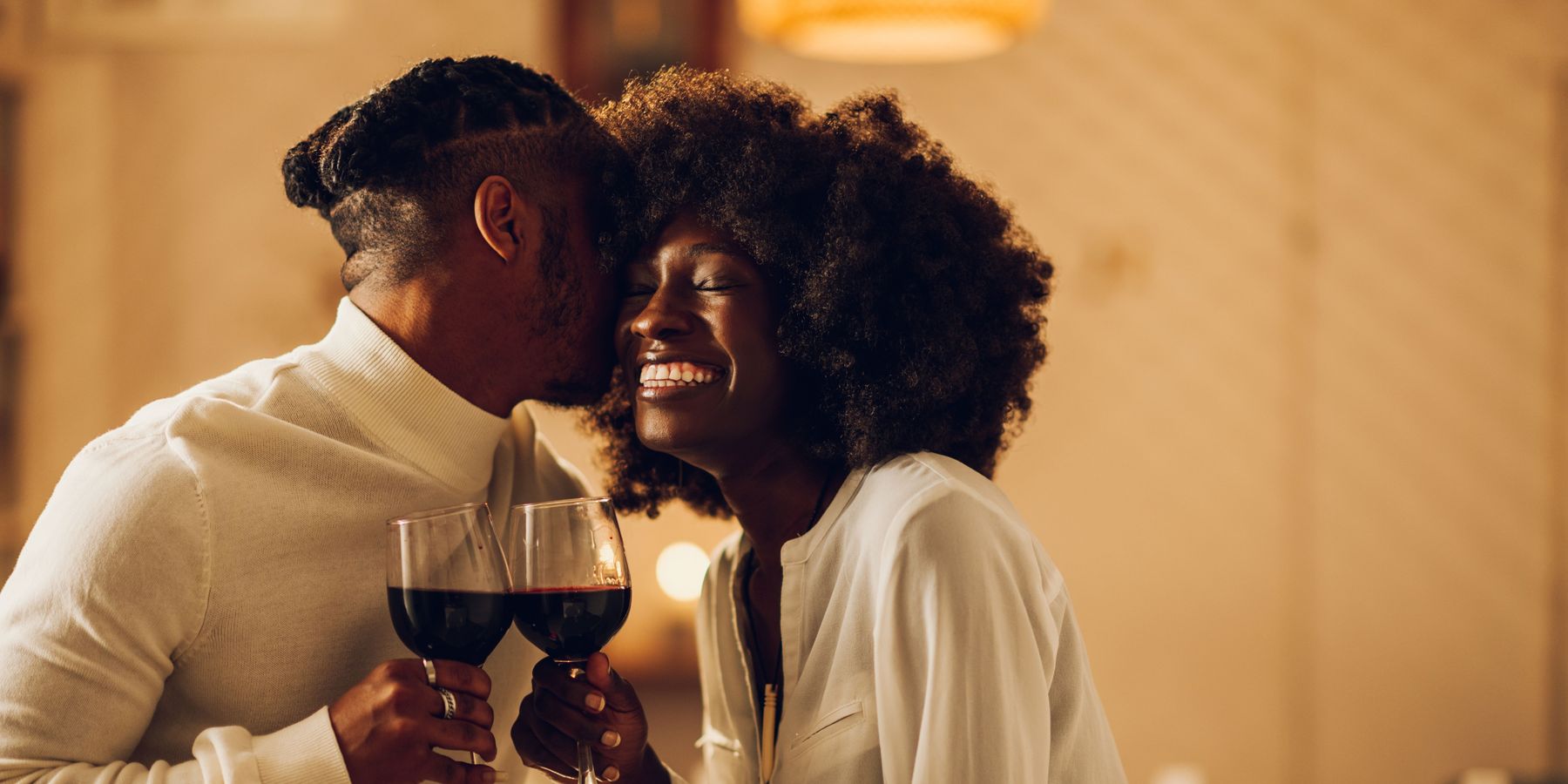
Anyway, I personally think that the less shallow folks out here may contemplate calling things “quits” or they at least distance themselves a bit from their partner (and what I’m referring to is serious relationships) due to all of the stress and strain that oftentimes comes with the holidays whether it be financial, familial, due to their tight schedules or something else.
Listen, I would hate for you and your man to miss the fun and happiness of experiencing this time of year, all because you are so overwhelmed or irritated that you can’t really enjoy it. That’s why I have a few practical tips for how to avoid allowing the typical holiday season stress from INFECTING your relationship.
Manage Your Expectations
 Giphy
GiphyUnmanaged expectations. If there is a main reason why the holiday season tends to be so stress-filled for so many people, I’d bet good money that this is the cause. And when you’re in a long-term relationship, expectations can manifest themselves in all sorts of cryptic and/or unexpected ways. You might have relatives who assume that you are going to be with them for Thanksgiving or Christmas when you have other plans in mind. You might be thinking that you are going to spend one amount for presents while your man is thinking something totally different. When it comes to scheduling, your signals may be crossed.
And you know what? To all of these scenarios, this is where clear and consistent communication come in. Don’t assume anything. Don’t dictate anything either. From now until New Year’s, mutually decide to check in once a week, just to make sure that you are both on the same page as it relates to the holidays and what you both are thinking will come along with it. The less blindsided you both feel, the less stressed out you will be. Trust me on this.
Set (and Keep) a Budget
 Giphy
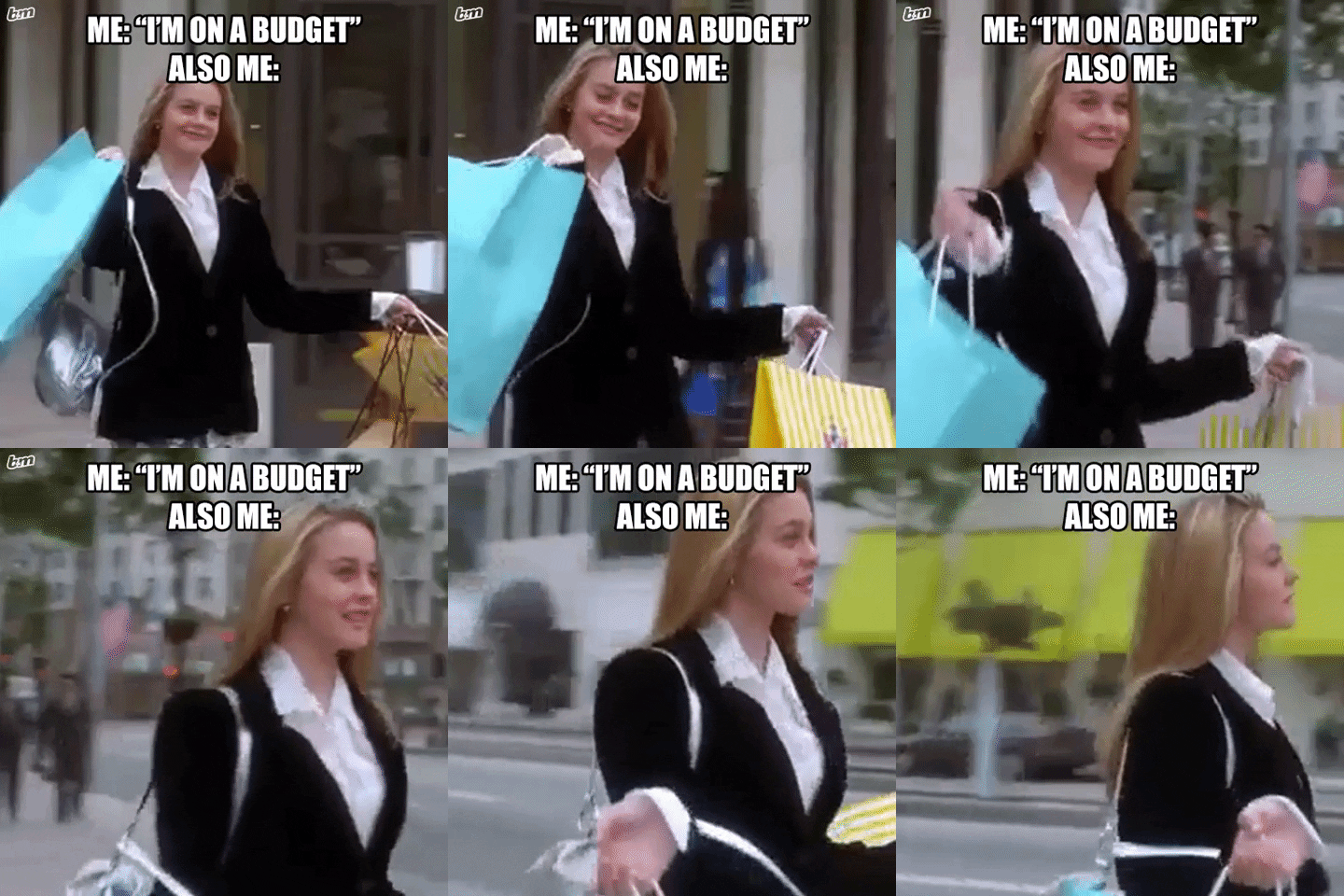
GiphyOkay, so I read that last year, 36 percent of Americans incurred some type of holiday-related debt. Hmph. Last year, there was still some sense of normalcy in this country, chile, so I can only imagine what finances are gonna look like over the next several weeks. That said, since I don’t know a lot of people who don’t find being broke stressful, make sure that you and your bae set a budget and then stick to it this year — no ifs, ands or buts.
Because really, y’all — it doesn’t make sense to deplete savings and/or max out credit cards for a few days of giggles only to be damn near losing your mind because you don’t know how to make ends meet come Dr. Martin Luther King, Jr. Day.
And by the way, this tip doesn’t just speak to things like food and gifts; I also mean travel. If it doesn’t make a ton of sense (or cents) to be all over the place this year — DON’T BE.
Keep Matthew 5:37 at the Forefront
 Giphy
GiphyIf off the top of your head, you don’t know what Matthew 5:37 says, no worries, here ya go: “But let your ‘Yes’ be ‘Yes,’ and your ‘No,’ ‘No.’ For whatever is more than these is from the evil one.” That verse right there? Oh, it’s a boundaries lifesaver! I say that because do you see “maybe” or “I’ll think about it” in there? Nope. LOL. It says that you should tell people “yes” or “no” and leave it at that — and that complements Anne Lamott’s quote, “’No’ is a complete sentence” impeccably well. Yeah, you’ve got to remember that anything beyond a yes or no to a request is privileged information; you don’t owe anyone details or an explanation.
Besides, if you are really honest with yourself, when someone asks you something and you give a “Umm, let me think about it” kind of reply, more times than not, you already know what your answer is going to be — so why not let you both off of the hook? Give your response. Commit to that. And let everyone (including yourself) get on with their lives and schedules.
I promise you that when it comes to those holiday parties, you are pissing more folks off by not RSVP’ing or doing so and not showing up than just saying, “Thank you but not this year” off the rip.
Remember That Your Personal Space Is Privilege Not a Right
 Giphy
GiphyA friend of mine recently bought a new house and invited me over to come see it. He’s a single man with no children, so as I was taking in all of the space that he had, especially as I walked through his finished basement, I joked about relatives coming to live with him. “Hell no” and “absolutely not” were pretty much his immediate responses as he went on to say that some folks even had the nerve to be offended when he told them that he had no intentions on taking DNA in.
Ain’t it wild how people think that your stuff is their right? And yes, that brings me to my next point. Your home is your sanctuary space. If you want to host folks this year — cool. If not, ALSO COOL. Please don’t let folks (family included) guilt you into how they want you to act or even into what they would do if the shoe was on the other foot. You are not them — and as one of my favorite quotes states, “If two people were exactly alike, one of them would be unnecessary.” (A man by the name Larry Dixon said that.)
Hell, my friends? They know that I am good for sending them random things that they need or even want all throughout the year. Coming over to hang out at my pace, though. Uh-uh. Chalk it up to being a card-carrying member of the ambivert club yet I like keeping my living space personal — and I sleep like a baby, each and every night, for feeling that way.
Always remember that your space, your time, your resources, your energy and shoot, yourself period (including your relationship), are all things that are your own. You get to choose how, when and why you want to share them. The holiday season is certainly no exception.
Cultivate Some “You Two Only” Traditions
 Giphy
GiphyIt’s not uncommon for some couples to hit me up after the holiday season to “detox.” Sometimes it’s due to the financial drama (and sometimes trauma) that they experienced. Sometimes it’s because they allowed their relatives (especially in-laws) to get more into their personal business than they should’ve. More than anything, though, it tends to be because they didn’t get enough quality time together and so ended up feeling “disconnected.”
Please don’t let that happen. Listen, I’m not even a holidays kind of woman and yet, I will absolutely sit myself down with some hot chocolate and chocolate chip cookies to enjoy a Hallmark holiday film or two. Aside from the fact that most of them are lighthearted and sweet, I also like that they usually focus on couples loving on each other amidst all of the holiday beauty and ambiance — which is something that all couples should set aside some time to do.
Maybe it’s a vacation. Maybe it’s a staycation. Or maybe it’s my personal favorite, A SEXCATION. Whether it’s for a few days, the weekend or even overnight — don’t you let the holidays go by without setting aside time for you and your man to celebrate one another. Don’t you dare (check out “Are You Ready To Have Some Very Merry 'Christmas Sex'?”).
GET. SOME. REST.
 Giphy
GiphyI once read that 8 out of 10 people get stressed out over the holidays and 3 out of 10 lose sleep during to it — and when you’re stress-filled and sleep-deprived, that can absolutely lead to hypersensitivity, making mountains out of molehills and even not being in the mood for sex.
Your relationship can’t afford to go through any of this, so definitely make sure to prioritize rest. I don’t care how unrealistic it might seem during this time, sleep should never be seen as a luxury; it will always and forever be a great necessity.
That said, try to get no less than six hours of shut-eye in (check out “6 Fascinating Ways Sex And Sleep Definitely Go Hand In Hand”) and even ask your bae to take a nap with you sometimes (check out “Wanna Have Some Next-Level Sex? Take A Nap, Sis.”). Not only will sleep help to restore your mind, body and spirit but, when it’s with your partner, it’s an act of intimacy that can make you both feel super connected, even in the midst of what might feel like chaos.
___
Holiday season stress is real. Still, never give it the permission or power to throw your relationship off. Put you and your man first and let the holidays be what they are gonna be, chile.
Let’s make things inbox official! Sign up for the xoNecole newsletter for love, wellness, career, and exclusive content delivered straight to your inbox.
Featured image by Shutterstock
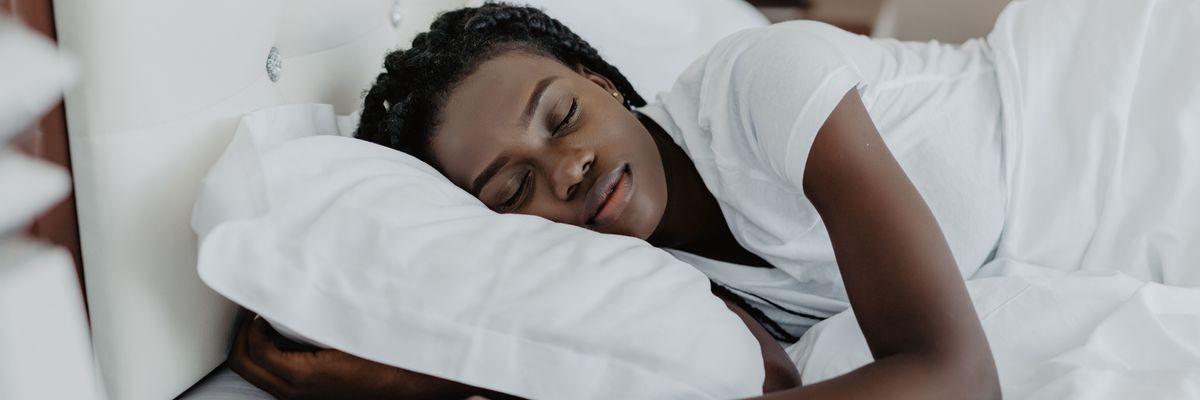
And so, since this is the time of year when catching a cold (and/or the flu) is common, let’s talk about the impact that sleep (and again, a lack thereof) has on your immune system. That way, you can remain as healthy as possible during the fall and winter seasons.
1. Less Sleep Means More Colds
 Giphy
GiphyLike I stated in the intro, I’m pretty sure you’ve heard somewhere that the fall and winter are the seasons when people are most susceptible to catching a cold or coming down with the flu. And that’s exactly why I thought I would start this all off by sharing the fact that some studies reveal that if you get less than six hours of sleep, on a consistent basis, you end up making yourself more vulnerable to coming down with both. In fact, some research says that only 18 percent of people who get six-plus hours of rest caught a cold while almost 40 percent who got less than that did.
The logic behind it all is sleep gives your body time to build up the proteins and cells (like cytokines and T-cells) that you need to fight off certain viruses. So, if nothing bothers you more than having a stuffy nose or stubborn cough when it’s cold outside, getting more sleep is one way to prevent that from happening to you.
2. Less Sleep Means More Allergy Symptoms
 Giphy
GiphyAt the end of the day, an allergy is basically what transpires whenever your immune system “overreacts” to something that other people’s systems do not. And since sleep is what helps to keep your immune system nice and strong — well, I’m sure you get how less allergy-related symptoms and more sleep go hand in hand. Also, since sleep helps to decrease bodily inflammation (more on that in a bit) and inflammation can also intensify allergy symptoms, that’s just one more reason to get as much shut-eye as possible.
3. Less Sleep Means Potential Diabetes and Heart Disease
 Giphy
GiphyDid you know that in 2024, Black women were diagnosed with diabetes 24 percent more than any other adult demographic. Also, it continues to be a reality that heart disease is the leading cause of death for Black women. These two sobering statistics alone should be enough of an incentive to do whatever you can to keep the risk of diabetes and heart disease way down.
One way to do that is by getting more sleep. Aside from the fact that sleep strengthens your immune system to where it is easier for you to fight off illness and diseases, sleep can keep your blood sugar levels in a healthy space; plus, when it comes to your heart, it gives it, along with your arteries and blood vessels a break.
4. Less Sleep Means Less Time for Your Body to Push “Reset”
 Giphy
GiphyIf you really stopped to consider all that your body goes through during the day (you can read some about that here), you definitely would respect it enough to do your best to thank it by giving it no less than six hours of sleep, each and every night. Sleep is what helps to slow your brain and body down so they are able to “refuel” for the next day. After all, how can your body prevent you from getting sick if your immune system is too worn out to fight ailments off? Exactly.
5. More Sleep Helps You to Fight Off Infections
 Giphy
GiphySpeaking of, in order for your body to fight off infections, there are certain cells and antibodies within you that need to be healthy and strong — one way that they get and stay that way is by you getting a good amount of sleep. For instance, remember when I touched on cytokines earlier? Well, the same way that they help to prevent colds, they also help to prevent infections too. And since sleep lowers your cortisol (stress) levels, rest gives your body the time and space to build up an army that can fight off free radicals and other health-related challenges while you are awake.
6. More Sleep Lowers Bodily Inflammation
 Giphy
GiphyWhenever a health-related issue is mentioned on this platform, inflammation is something that is mentioned quite a bit. Probably the easiest way to explain inflammation is it’s how your body responds/reacts whenever something is happening to your body that shouldn’t be, whether it’s an illness, an injury, a germ or something that you may be allergic to.
If you happen to have chronic inflammation, some symptoms that are associated with that include fatigue, stiff joints, skin rashes, weight gain and moodiness.
The interesting thing about all of this is if you aren’t getting enough rest, you could be triggering inflammation in your body. That’s because studies reveal that a lack of sleep can elevate molecules that are associated with inflammation. So, if you don’t want inflammation to increase within your system, you should definitely catch more zzz’s.
7. More Sleep Regulates Hormones
 Giphy
GiphyWhen it comes to hormones like serotonin, estrogen and cortisol, believe it or not, they play a role in how your immune system acts and overreacts. That’s because, if your hormones are out of balance, that can cause your immune system to work harder than it actually should and that can make you more vulnerable to sickness. One way to keep your hormones leveled out? SLEEP.
That’s because sleep gives your body the opportunity to rest, repair and restore your hormone levels. On the other hand, when you are sleep deprived, that can put/keep your hormones on the ultimate roller coaster ride. #notgood
8. More Sleep Strengthens Vaccines
 flu shot GIF - Find & Share on GIPHYGiphy
If you’re someone who is good for getting some sort of vaccine around this time of the year, make sure that you rest up before and after getting your shots. Not only does adequate rest before a vaccination help your immune system to be better receptive to your shots but sleep also helps your body to build up enough antibodies to make your vaccinations effective after getting them. Because if you’re gonna get pricked, shouldn’t it be worth it? My thoughts exactly.
Get some freakin’ sleep! Your immune system depends on it.
Let’s make things inbox official! Sign up for the xoNecole newsletter for love, wellness, career, and exclusive content delivered straight to your inbox.
Featured image by Shutterstock