



I've never accepted the term "daddy issues". It has always rubbed me the wrong way because it automatically puts a permanent stain on a woman's forehead. It seems to provide a convenient excuse for any failed relationship where there's no apparent wrong-doing on the man's part, whether it's really the woman's fault or not.
In the past, I also wasn't into applauding men who were present for their children, either. It seemed weird to clap for fathers who did what they were supposed to do, after all, we don't do this for mothers. But I realize that part of my thinking could come from a place of mild resentment considering I didn't have the most ideal relationship with my father.
I must say that I'm now in awe of those same fathers. It's that fascination that made me tune into the OWN special They Call Me Dad earlier this month. The show put a spotlight on male celebrities who play an active role in their children's lives. Men like author and filmmaker, Bishop T.D. Jakes, gospel artist Kirk Franklin and musical entertainer and renowned DJ, Derrick "D-Nice" Jones, talked about their journeys from youth to fatherhood and demonstrated how they show up for their kids.
The men also made the distinction between father and dad––the latter being more than biological.
And their children, particularly their daughters, explained how they viewed their dads in their lives. Third-year law student Ashli Jones sees D-Nice as her advocate and real-life superhero while Woman Evolve founder Sarah Jakes Roberts sees Bishop Jakes as Liam Neeson's character in the movie Taken, traveling across the world battling bad men to save his baby if he had to. Both the dads and their children describe the paternal role as protector, guide, and provider.
I grew up in a single-family home with my mom and I saw my father usually on Friday nights. He was my board game partner, popping the plastic bubble on hours of Trouble, and my card game teacher, showing me strategy on everything but Spades.
It took a few years to learn that this wasn't exactly normal and I'm not just referring to youth who live in two-parent households as normalcy. In fact, this was complicated. My father was actually married and lived a few miles from the home where I lived with my mom. Truthfully, I didn't really know him, know him because there was a huge part of his life that I was excluded from. This fact became more evident after my mom passed away and I moved to my grandparents' home two backyards, a road, and a front yard away from my father's house.
It's when I had to acknowledge that that's not a world I was part of. I wasn't exactly welcomed in his house, at least in the beginning. I didn't get to meet paternal family members when they came to town. I attended the same school as my cousins and we knew each other but the kinship was unspoken.
While I was born out of a less than ideal union, I don't accept fault but I still can't help but feel that some parts of me are incomplete and not accepted.
I'd never use the words "superhero", "protector", "guide" or "advocate" as the young ladies in the OWN special did. And while "provider" would be a fair descriptor, what does that really mean? As Bishop Jakes said, it's about the presence, not the presents. I couldn't even say I felt defended. That was another thing that became quite clear and turned an amicable relationship into a deteriorating one near and at his death. Many times I question why I even bothered to show up at all.
I'm not trying to judge, express guilt, or point any blame, though. I get that parents do the best they can at the moment. But the actions or inactions of absent parents do inadvertently put us in precarious positions and get used against us daughters in a demeaning way during adulthood, particularly in intimate relationships.
I repeatedly made poor decisions in men, specifically choosing those who were emotionally unavailable, which I talk about in a separate article. And I also had the habit of staying in those "situationships" long beyond their expiration dates. It's like I was determined to make them choose me back.
Hearing Kirk Franklin say that dads are the first men to teach women love and self-worth last week prompted me to just Google "daddy issues". It wasn't that I was owning the label or anything. But I was owning my failure in relationships. I'm at a place where I can write all day about them. I'm just leery of blanket diagnoses.
I already knew society would say, "Yep, sis, you have classic 'daddy issues'." Society would also assume that I'm attracted to older men, I call my partner 'daddy,' I'm clingy and jealous, I crave attention from men and I need reassurance of love and affection. It's the standard answer, more so than "mama's boy", which doesn't carry the same stigma. A quick Google search of "mama's boy" required me to scroll and click around before I found articles.
However, for my search, it really wasn't about the men. Ultimately, I still attracted and tolerated the wrong ones. Now I only wanted to dissect the term for my own benefit because I was curious and I want to open myself up to a healthy relationship.
I knew my intuition was on point––when I chose to listen to it, that is. What I found is that this so-called "daddy issues" rhetoric is stereotypical and sexist and it doesn't only apply to women.
Here's what I learned about it specifically:
1. The Term "Daddy Issues" Isn't A Disorder, It's Disrespectful
"Daddy issues" isn't even a condition or disorder listed in the Diagnostic and Statistical Manual of Mental Disorders (DSM-5). In fact, Houston-based psychotherapist Amy Rollo told Healthline that she and many other experts don't even believe in daddy issues and that they see the phrase as a way to minimize women's attachment needs. An article in MindBodyGreen goes a step further to say that it belittles a woman's relationship struggles. Quite frankly, it's lowkey disrespectful and the more appropriate way to tackle it is to recognize and understand one's attachment style, which is explained here and discussed here.
2. Daddy Issues Aren't Gender-Specific
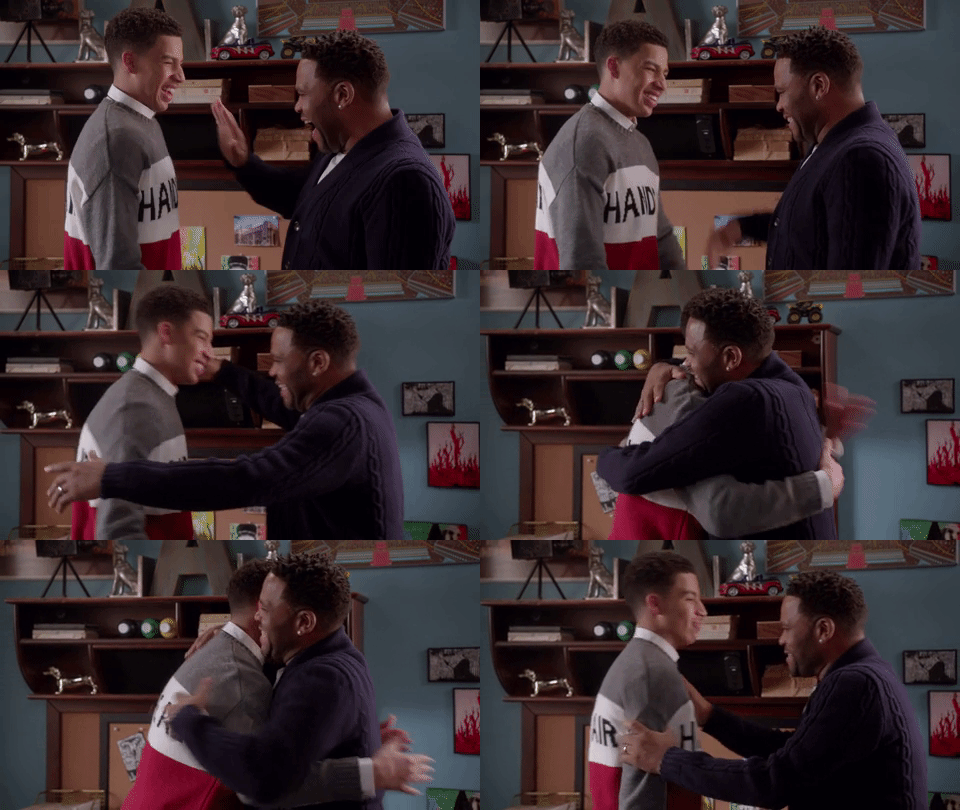
The first "daddy issue" originated between father and son. Psychoanalyst Sigmund Freud came up with the "father complex", which described "someone who has unconscious associations and impulses resulting from an individual's poor relationship with their father." Freud initially believed this father complex only affected men. The term didn't apply to women until later and then it stuck. And while modern-day attachment issues are almost always directed to father and daughter, they could actually be son and mother issues and grandparents can be added to the mix as well.
I can admit that I needed to do some internal work before I even considered entering a relationship. I would've repeated a toxic cycle indefinitely. I also can't argue that my relationship with my father didn't play a significant part in who I was attracted to. I gravitated towards whatever was familiar or whatever was wounded. That's also our way of changing the plots or endings to our ongoing narratives.
But misused and misunderstood labels like "daddy issues" are harmful. Women aren't the only gender trying to reconcile what we didn't get from absent parents to what we can't give or don't receive from our partners. Men do, too, all the time. A more helpful approach is to drop the "daddy issues" label and call it what it is.
Many of us, men and women alike, have difficulty forming healthy bonds with potential significant others. But with a little reflection and a whole lot of healing, we can all learn to form secure attachment styles, and perhaps then we'll finally find a true protector, defender, and real-life superhero in our partners.
Are you a member of our insiders squad? Join us in the xoTribe Members Community today!
Featured image by Shutterstock.
- From Miss Independent To 'Mrs' : Why These Adjustments Are ... ›
- LeToya Luckett Had To Forgive Her Father Before Finding True Love ›
- 6 Lessons I've Learned From My Daddy Issues - xoNecole: Women's ... ›
- 25 Valuable Life Lessons From Failed Relationships - xoNecole: Women's Interest, Love, Wellness, Beauty ›
- How To Deal With Daddy Issues By Healing Your Father Wound ... ›
- How to Heal Your "Daddy Issues" (and btw, men have them too) ›
- How did you learn to deal with your daddy issues? - Quora ›
- Daddy Issues Explained - Freud's PsychoSexual Developmental ... ›
- Relationships and Men With Daddy Issues | HuffPost UK Life ›
- We Asked Three Experts How to Deal with Daddy Issues ›
- Yes, 'Daddy Issues' Are a Real Thing — Here's How to Deal ›
RELATED




Kayla Nicole says she wore a dress that was once worn by Braxton herself for the Halloween costume. “It’s not a secret Toni is more on the petite side. I’m obsessed with all 5’2” of her,” she tells xoNecole via email. “But I’m 5’10'' and not missing any meals, honey, so to my surprise, when I got the dress and it actually fit, I knew it was destiny.”
The episode was the perfect way for the multihyphenate to take control of her own narrative. By addressing the viral moment on her own platform, she was able to stir the conversation and keep the focus on her adoration for Braxton, an artist she says she grew up listening to and who still makes her most-played playlist every year. Elsewhere, she likely would’ve received questions about whether or not the costume was a subliminal aimed at her ex-boyfriend and his pop star fiancée. “I think that people will try to project their own narratives, right?” she said, hinting at this in the episode. “But, for me personally – I think it’s very important to say this in this moment – I’m not in the business of tearing other women down. I’m in the business of celebrating them.”
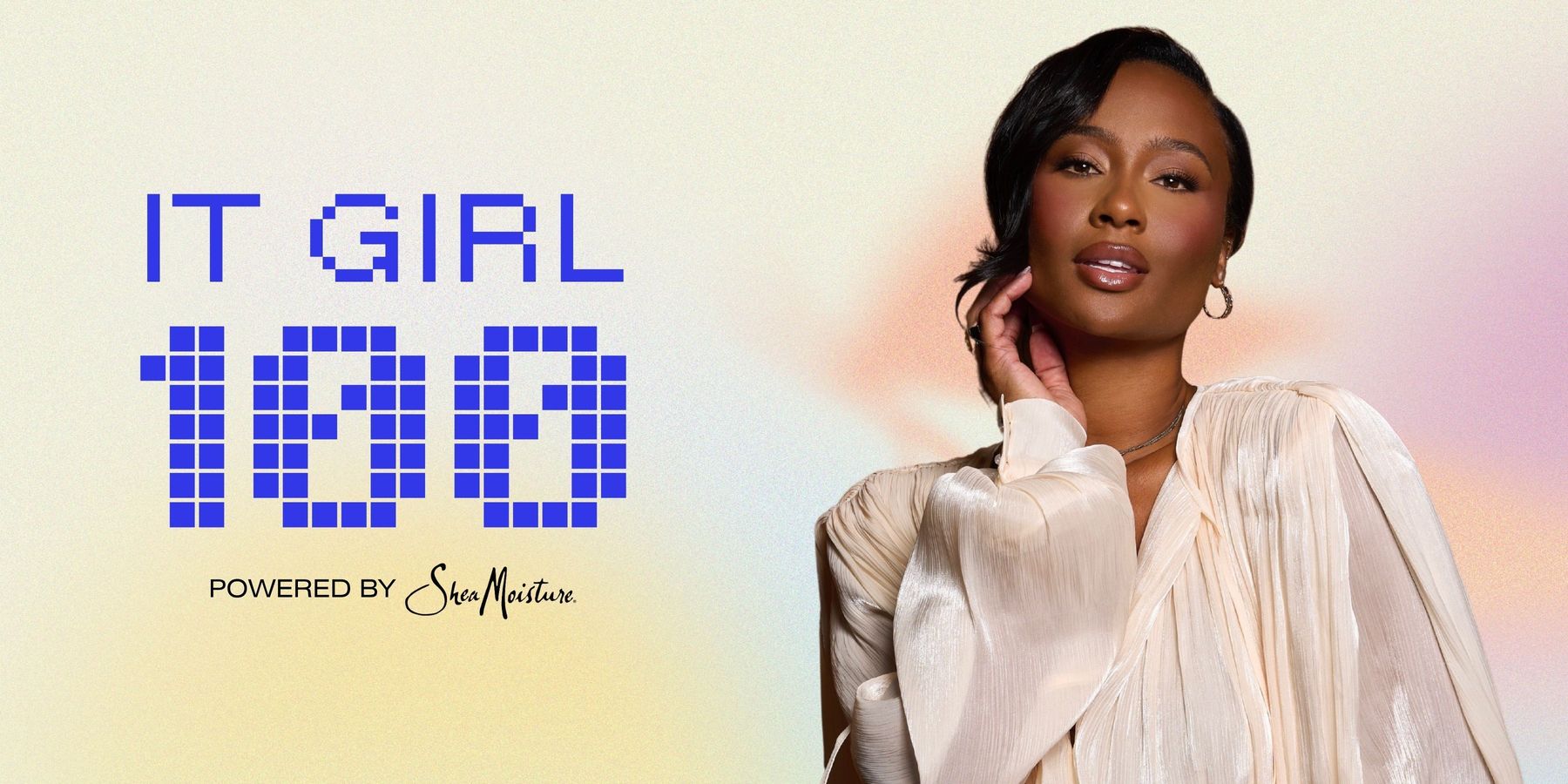
Kayla Nicole is among xoNecole’s It Girl 100 Class of 2025, powered by SheaMoisture, recognized in the Viral Voices category for her work in media and the trends she sets on our timelines, all while prioritizing her own mental and physical health. As she puts it: “Yes, I’m curating conversations on my podcast The Pre-Game, and cultivating community with my wellness brand Tribe Therepē.”
Despite being the frequent topic of conversation online, Kayla Nicole says she’s learning to take advantage of her growing social media platform without becoming consumed by it. “I refuse to let the internet consume me. It’s supposed to be a resource and tool for connection, so if it becomes anything beyond that I will log out,” she says.
On The Pre-Game, which launched earlier this year, she has positioned herself as listeners “homegirl.” “There’s definitely a delicate dance between being genuine and oversharing, and I’ve had to learn that the hard way. Now I share from a place of reflection, not reaction,” she says. “If it can help someone feel seen or less alone, I’ll talk about it within reason. But I’ve certainly learned to protect parts of my life that I cherish most. I share what serves connection but doesn’t cost me peace.
"I refuse to let the internet consume me. It’s supposed to be a resource and tool for connection, so if it becomes anything beyond that I will log out."
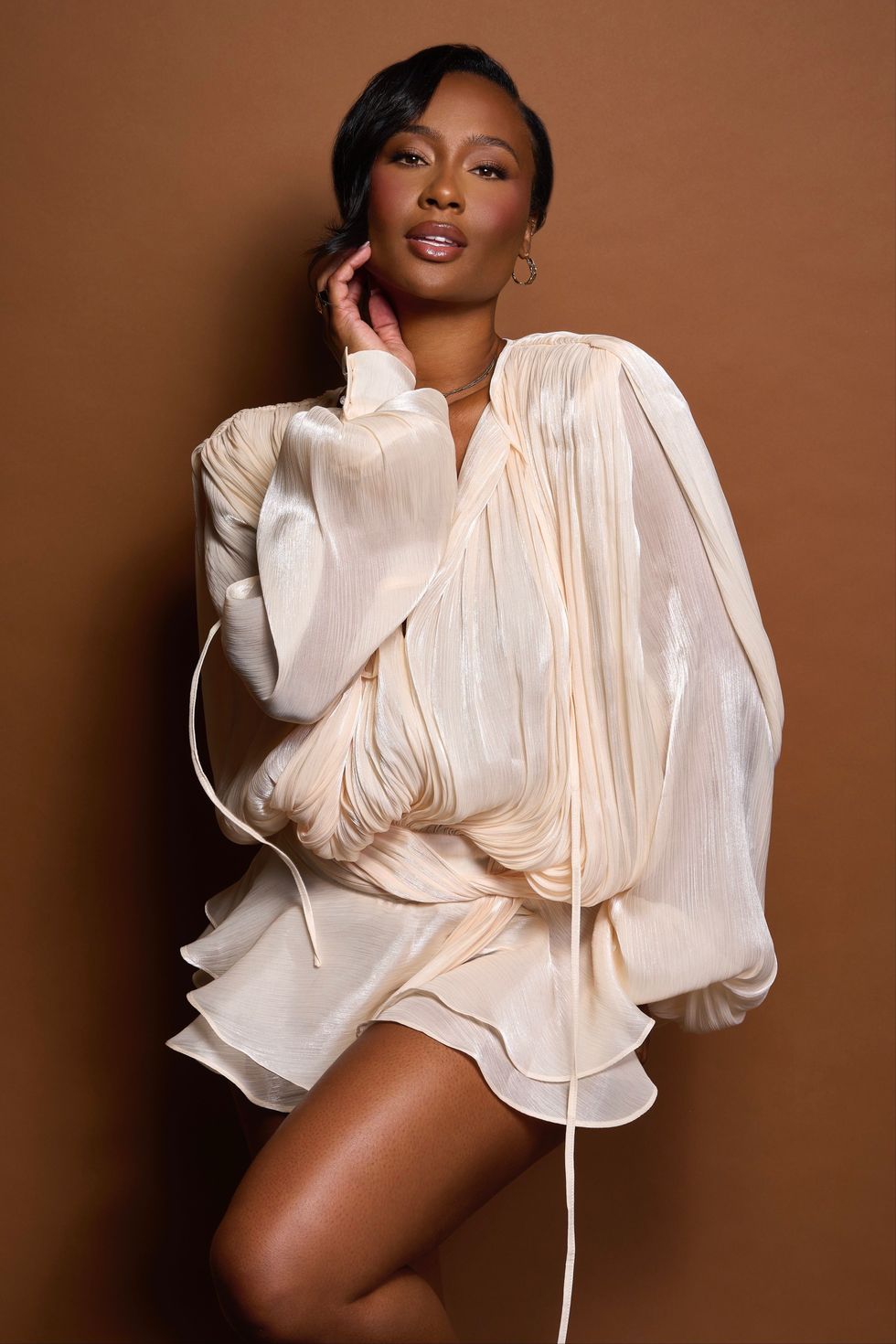
Credit: Malcolm Roberson
Throughout each episode, she sips a cocktail and addresses trending topics (even when they involve herself). It’s a platform the Pepperdine University alumnus has been preparing to have since she graduated with a degree in broadcast journalism, with a concentration in political science.
“I just knew I was going to end up on a local news network at the head anchor table, breaking high speed chases, and tossing it to the weather girl,” she says. Instead, she ended up working as an assistant at TMZ before covering sports as a freelance reporter. (She’s said she didn’t work for ESPN, despite previous reports saying otherwise.) The Pre-Game combines her love for pop culture and sports in a way that once felt inaccessible to her in traditional media.
She’s not just a podcaster, though. When she’s not behind the mic, taking acting classes or making her New York Fashion Week debut, Kayla Nicole is also busy elevating her wellness brand Tribe Therepē, where she shares her workouts and the workout equipment that helps her look chic while staying fit. She says the brand will add apparel to its line up in early 2026.
“Tribe Therepē has evolved into exactly what I have always envisioned. A community of women who care about being fit not just for the aesthetic, but for their mental and emotional well-being too. It’s grounded. It’s feminine. It’s strong,” she says. “And honestly, it's a reflection of where I am in my life right now. I feel so damn good - mentally, emotionally, and physically. And I am grateful to be in a space where I can pour that love and light back into the community that continues to pour into me.”
Tap into the full It Girl 100 Class of 2025 and meet all the women changing game this year and beyond. See the full list here.
Featured image by Malcolm Roberson

Meanwhile, frankincense and myrrh originate from the Middle East and Africa (you know, like the Bible does — some folks need to be reminded of that—eh hem — Trumpers) and ginger? It too helps with indigestion (which can definitely creep up at Thanksgiving and Christmas dinner tables); plus, it’s a key ingredient for ginger snaps and gingerbread houses. So, as you can see, holiday-themed scents have a rhyme and reason to them.
Tying this all in together — several years ago, I penned an article for the platform entitled, “Are You Ready To Have Some Very Merry ‘Christmas Sex’?” Well, in the spirit of revisiting some of that content, with a bit of a twist, I decided to broach some traditional holiday scents from the perspective of which ones will do your libido a ton of good from now through New Year’s Eve (check out “Make This Your Best NYE. For Sex. EVER.”).
Are you ready to check some of them out, so that, whether it’s via a candle, a diffuser, some essential oil, or some DIY body cream (check out “How To Incorporate All Five Senses To Have The Best Sex Ever”), you can bring some extra festive ambiance into your own boudoir? Excellent.
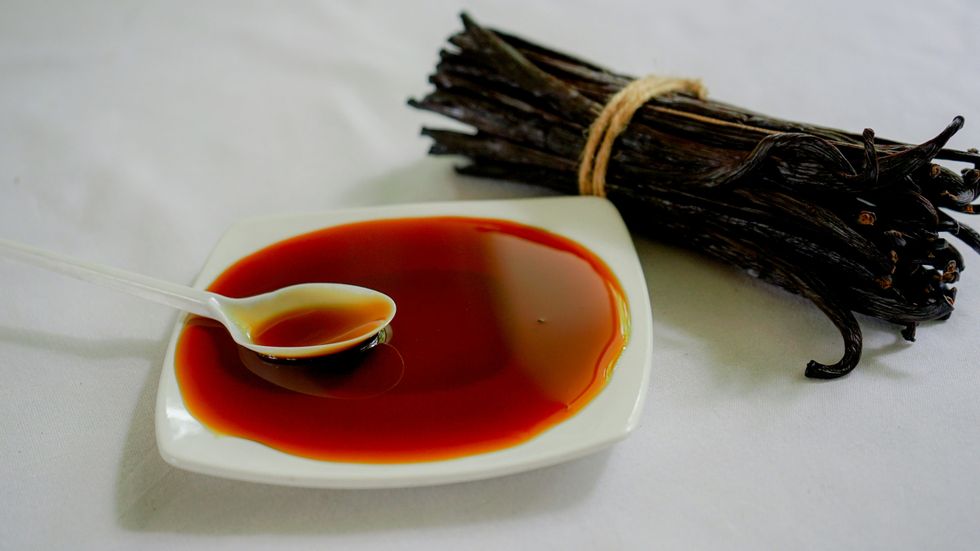
1. Vanilla
Unsplash
When it comes to holiday desserts, you’re going to be hard-pressed to find recipes that don’t include vanilla — and that alone explains why it is considered to be a traditional holiday scent. As far as your libido goes, vanilla is absolutely considered to be an aphrodisiac — partly because its sweet scent is considered to be very sensual. Some studies even reveal that vanillin (the active ingredient in vanilla) is able to increase sexual arousal and improve erectile dysfunction in men. So, if you adore the smell, here is more incentive to use it.
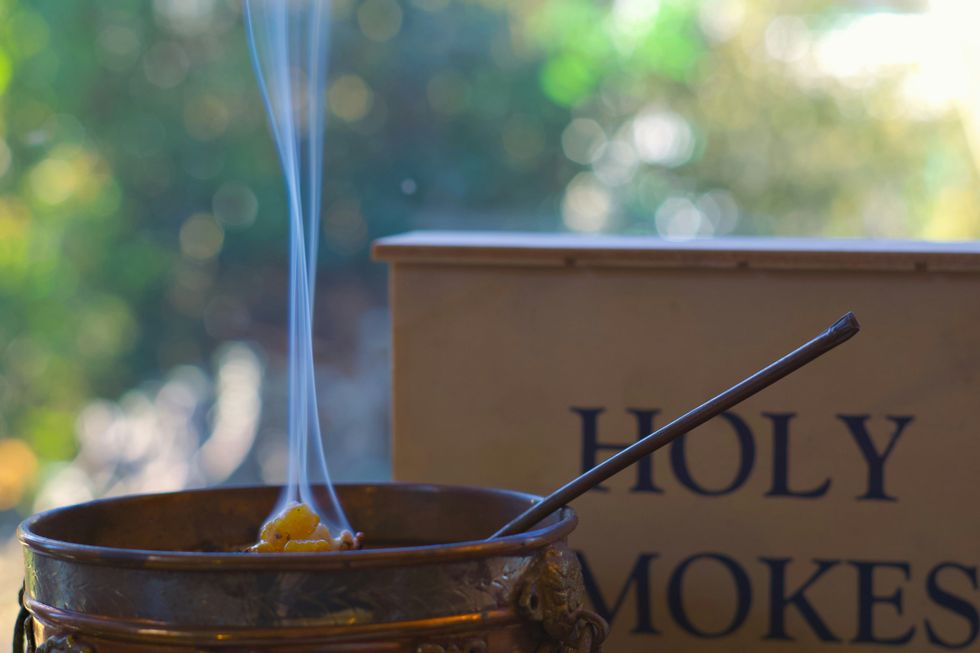
2. Frankincense
Unsplash
Although, typically, when people think about frankincense (and myrrh), it’s in the context of the gifts that the wise men brought Christ after he was born; it’s a part of the biblical Christmas story. However, frankincense goes much deeper than that. Sexually, since it has an earthy and spicy scent, some people like to use it to meditate (check out “What Exactly Is 'Orgasmic Meditation'?”). Also, since it has the ability to put you in a better mood, soothe and soften your skin and maintain your oral health — with the help of frankincense, every touch and kiss can be that much…sexier.
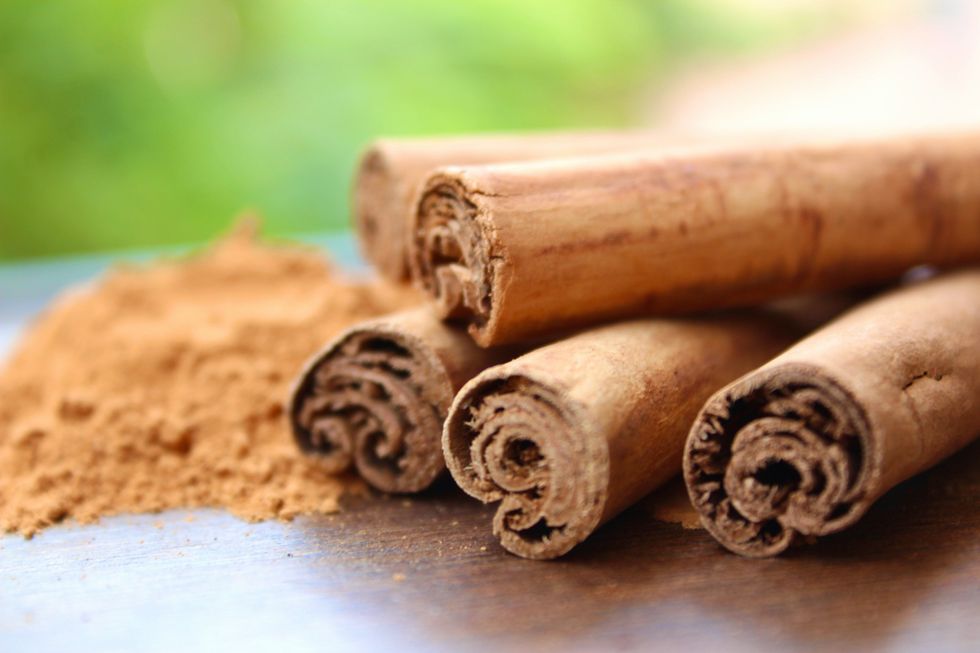
3. Cinnamon
Unsplash
I already gave cinnamon a shout-out in the intro. Personally, I’ve been a fan of it, in the sex department, for a long time now (check out “12 ‘Sex Condiments’ That Can Make Coitus Even More...Delicious”). When it’s in oil form, it can be very sweet to the taste while sending a warm sensation throughout the body — which is why the giver and receiver of oral sex can benefit from its usage. Beyond that, cinnamon helps to increase blood flow to your genital region, elevate sexual desire and, some studies say that it can even help improve fertility. Beautiful.
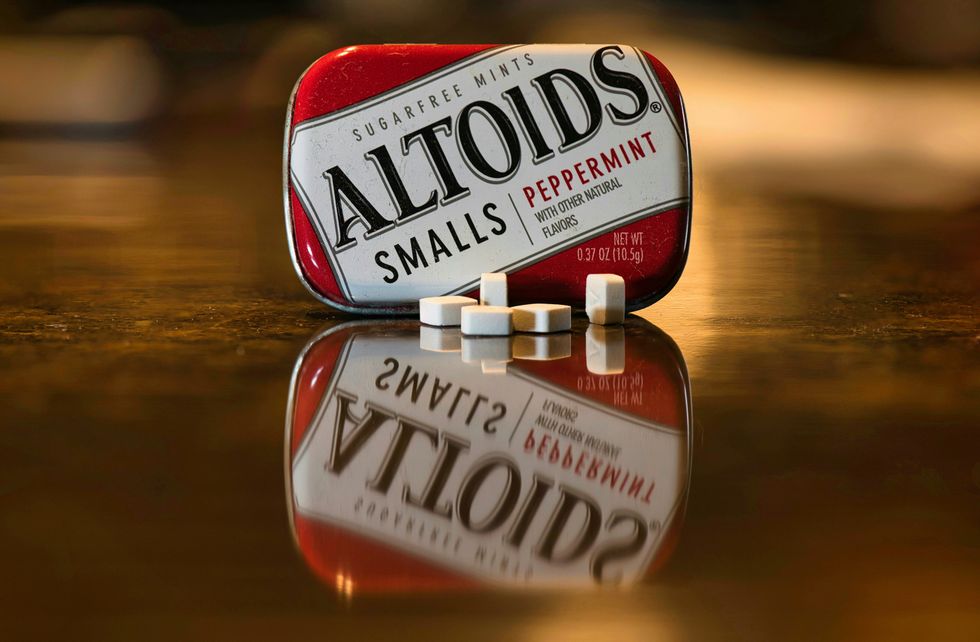
4. Peppermint
Unsplash
If there’s a signature candy for the holiday season, it’s probably a candy cane — which automatically puts peppermint in the running for being an official holiday scent. Pretty much, in any form, it’s got your sex life’s back because it’s hailed as being a sexual stimulant; in part, because its smell is so invigorating. Plus, it helps to (eh hem) ease headaches, it gives you more energy and it can definitely help to freshen your breath. Also, that minty sensation? The same thing that I said about cinnamon can apply to peppermint too (if you catch my drift).
5. Ginger
Unsplash
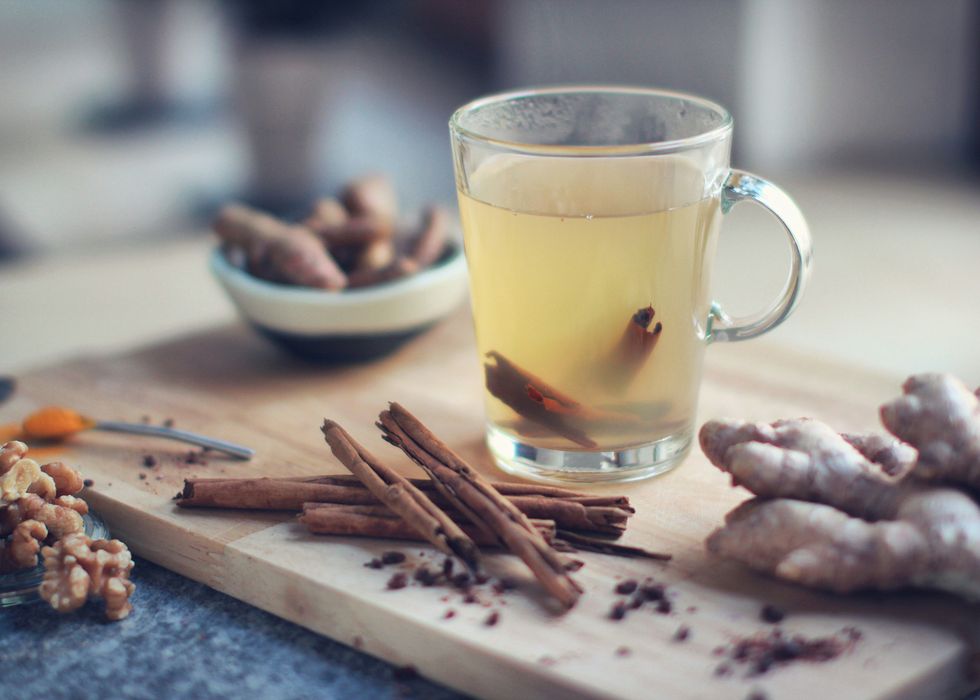
Whether it’s in a meal or in your bedroom, ginger is going to produce results that are hella spicy. On the sex tip, science has praised ginger for being able to increase sexual arousal, improve blood circulation (which intensifies orgasms) and strengthen fertility for many years. Scent-wise, I find it to be one that both men and women enjoy because it is both woodsy and sweet. So, if you’ve got some massage oil in mind, adding some ginger is a way to please you both.
6. Pomegranate
Unsplash
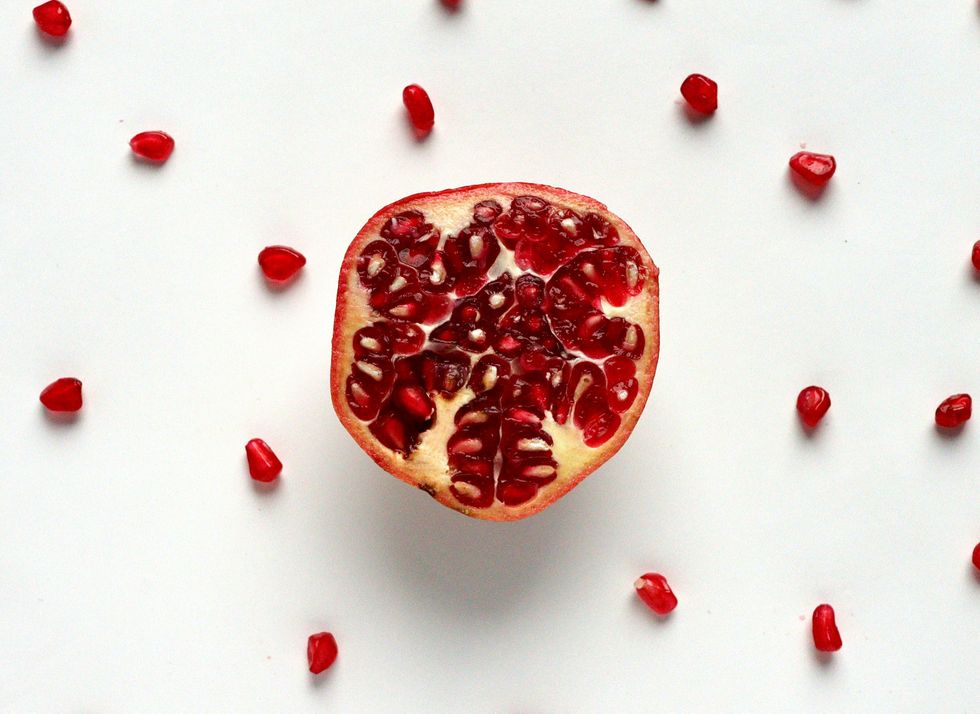
September through December is the time of year when pomegranates are considered to be in season. And, as someone who is a Rosh Hashanah observer, I have a personal adoration for them because I am aware of the various things that they symbolize in Hebrew culture including the fact that they are a fruit that represents love and fertility. So yeah, they would absolutely be an aphrodisiac — one that is perfect for this time of the year. While consuming it helps to boost testosterone levels in both men and women, the floral bittersweet smell that it produces can help to reduce stress while promoting relaxation (like most floral scents do) — and the more relaxed you are, the easier it is to climax.
7. Nutmeg
Unsplash
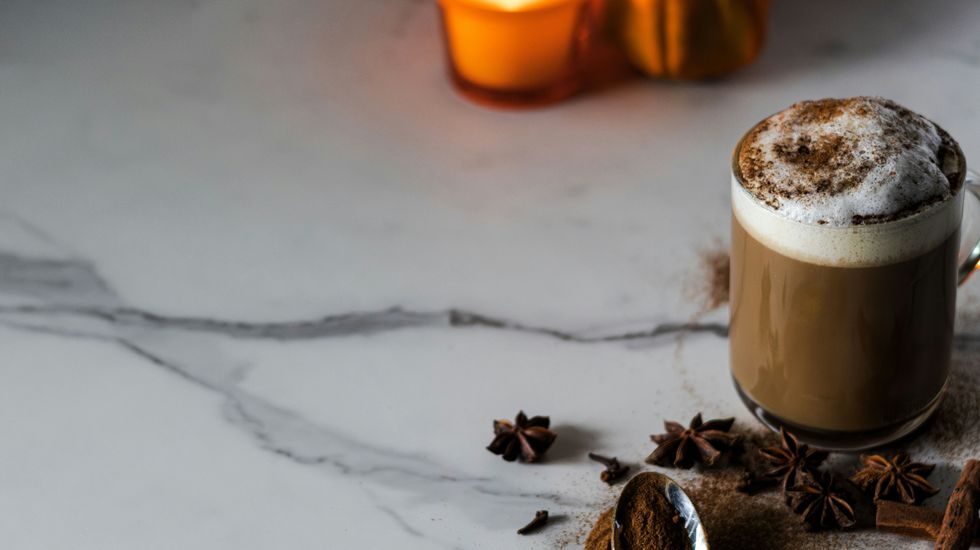
Another signature seasoning during the holiday season is nutmeg. It’s perfect in Thanksgiving sweet potato (or pumpkin) pie and Christmas morning French toast. And yes, it can also make your sex life better. If you consume it, it can intensify your libido and, overall, its warm-meets-spicy-meets-sweet smell is so inviting that it is considered to be a pretty seductive scent.
8. Cloves
Unsplash
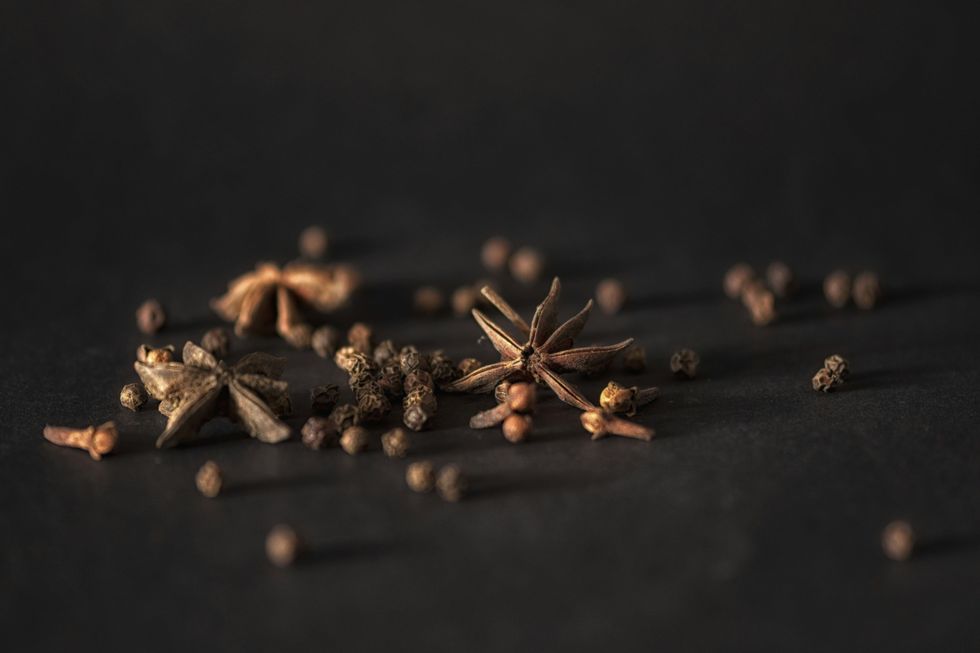
I ain’t got not one lie to tell you — if you’ve got a toothache, put some clove oil on that bad boy and send me a Christmas present for putting you on game. Aside from that, as I round all of this out, cloves are another holiday scent that can do wonders for your sex life. For men, it has the ability to significantly increase sexual arousal and improve stamina and endurance. For men and women alike, it also has a reputation for strengthening sexual desire. And for women solely? Well, if you want an all-natural way to increase natural lubrication down below — the scent and and feel (in DILUTED oil form) can make that happen. It can make the holidays especially special…if you know what I mean.
Ah yes — the atmosphere of the holidays and what it can do.
Take it all in! Scent ‘n whatever stimulating that comes with it! #wink
Let’s make things inbox official! Sign up for the xoNecole newsletter for love, wellness, career, and exclusive content delivered straight to your inbox.
Featured image by Giphy